
Growth hacking for startups in 2026: 10 tactics that actually work
Every successful startup has a story about a breakthrough moment when growth suddenly accelerated. Slack built early buzz with an invite-only launch, PayPal rapidly expanded through its famous referral program, Dropbox attracted thousands of eager users with a simple demo video, and Uber turned free ice cream deliveries into a viral marketing campaign. These weren’t accidents, they were carefully designed growth hacks: creative, low-cost tactics that generated a surge of attention, users, and momentum. While each tactic was temporary, it helped these companies reach critical mass and laid the foundation for long-term growth.
Unfortunately, in 2026 the playbook for scaling a startup has fundamentally changed. The era of the shallow "hacks”, the loop-holed platform exploits, the raw spamming of automated outbound sequences, is officially over. Today the algorithmic filters are sharper, user defense mechanisms are at an all-time high, and AI-driven distribution channels demand real substance. For years, founders hunted for the single platform loophole that would grant them cheap, infinite scale. But platform engineering teams close loops within days now, not months. Relying on an exploit means your business model has an expiration date. True growth engineering means building owned loops that rely on lean, programmatic distribution, not external platform mercy.
In this guide we cover 10 tactics that consistently generate traction for early-stage startups right now, along with the framework you need to run them properly.

What is growth hacking?
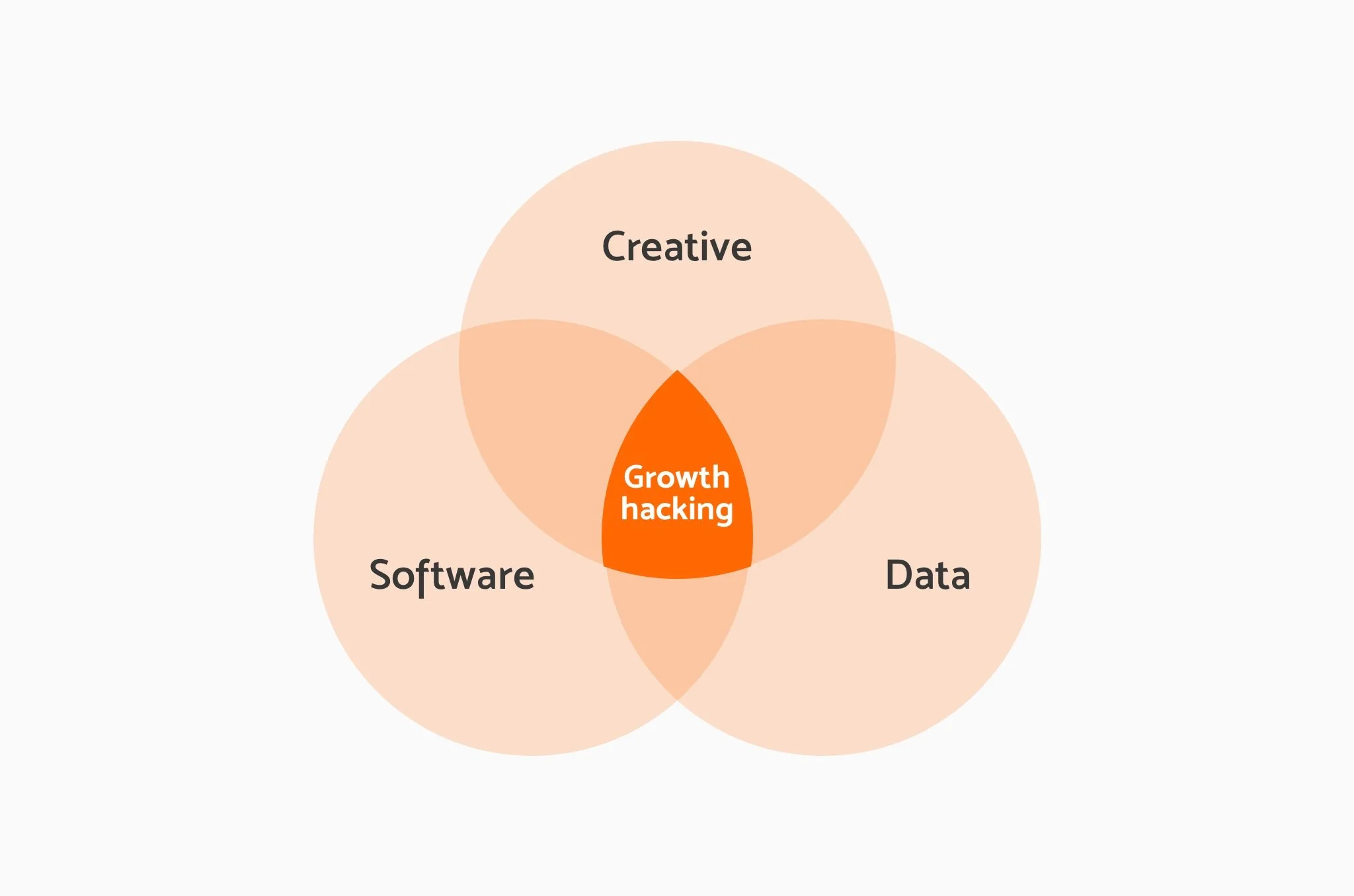
Growth hacking is a cross-functional, experiment-driven approach to achieving rapid growth with minimal budget. The term was coined by Sean Ellis in 2010 to describe a role where marketing, product development, and data analysis overlap. A growth hacker's only goal is growth, measured by a single north star metric.
What separates growth hacking from traditional marketing is scope and method. Traditional marketing runs campaigns. Growth hacking runs experiments: across acquisition, activation, retention, and referral simultaneously. It treats the product itself as a distribution channel, not just the thing you're distributing.
What it isn't: a list of tricks you apply once and forget. Growth hacking is a process. The tactics in this article are only as useful as the testing infrastructure behind them.
The AARRR framework: the foundation of growth hacking
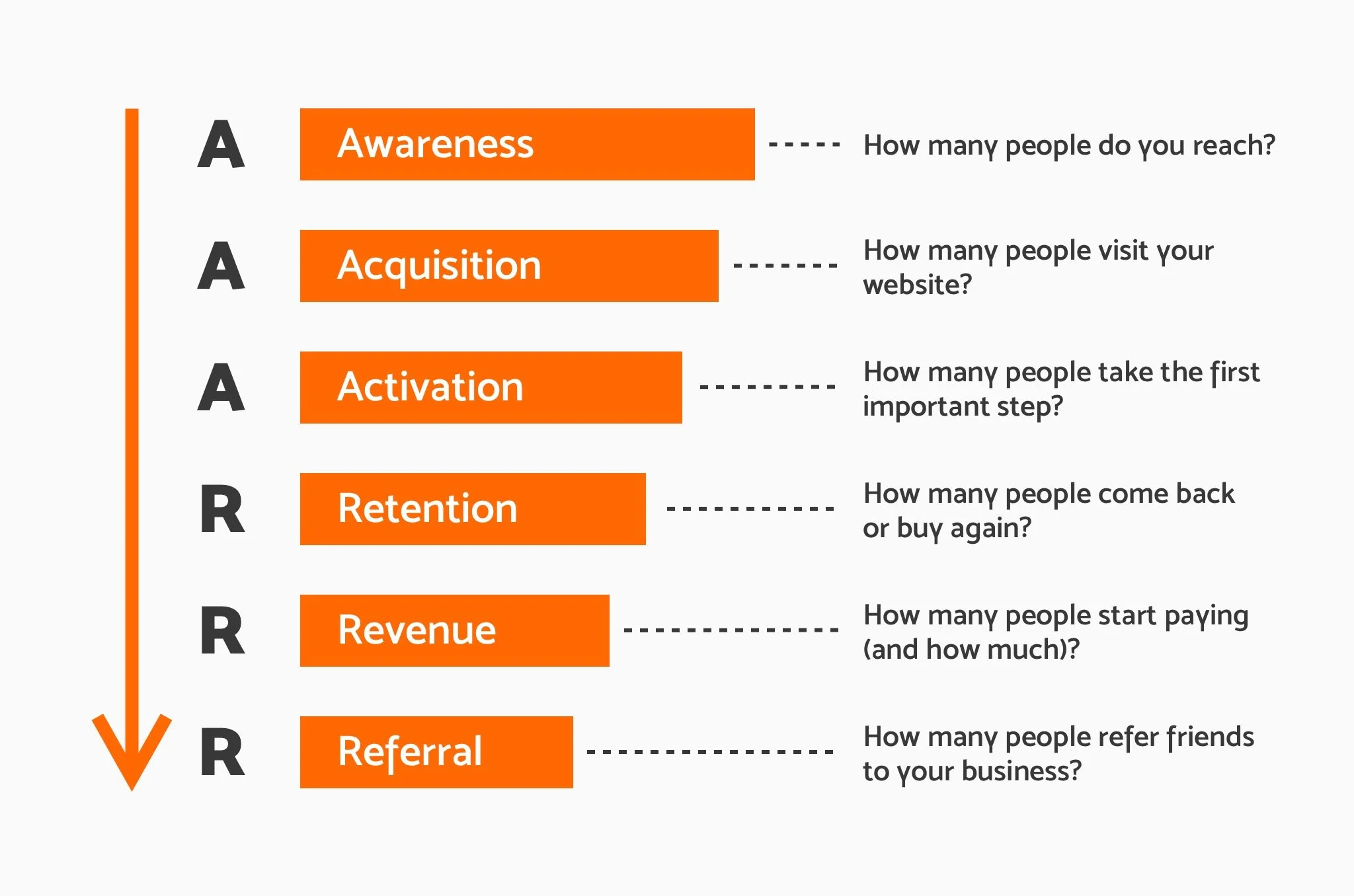
Before running any experiment, you need to know where your funnel is leaking. The AARRR framework (aka ‘pirate metrics’) gives you that map.
Acquisition: How do users find you? SEO, paid ads, cold outbound, referrals, social, integrations. Most founders over-invest here.
Activation: Do users experience the core value quickly? This is your "aha moment" — the first time a user understands why your product matters. It might be completing their first task, seeing their first insight, or connecting their first integration.
Retention: Do they come back? Week-1 retention is the single most predictive metric for long-term growth. A product with 40% week-1 retention that you stop investing in will still grow. A product with 10% retention that you flood with acquisition budget will still churn.
Revenue: Does activation lead to payment? This is where conversion rate optimization and pricing experiments live.
Referral: Do satisfied users bring others? Referral is the only channel that compounds automatically without increasing cost per acquisition.
The mistake most early-stage founders make: they spend 90% of their growth budget on Acquisition and ignore Retention. You're filling a leaky bucket. Fix the bucket first.
Growth Hacking tactics for startups
1. Onboarding optimization (activation before acquisition)
This isn't glamorous, but it's probably the highest-leverage growth hack available to most early-stage startups. The most critical metric for any digital product is Time-to-First-Value (TTFV): the exact duration it takes for a newly registered user to experience the core utility of your software. Identify your product's "Aha moment": the specific action that best correlates with a user becoming a retained, paying customer. Then rebuild your onboarding to get every new user to that moment within their first session. Remove every step that doesn't lead there.
Companies that identify their activation milestone and engineer onboarding around it typically see a 40% improvement in trial-to-paid conversion without adding any new acquisition channels. That's equivalent to doubling your marketing budget, except it costs almost nothing.
2. Hyper-Personalized Dynamic Onboarding Loops
Generic cold email is functionally dead in 2026. What works is reaching prospects at the exact moment they show a buying signal: a new job posting, a funding announcement, a technology change detected in their stack, a LinkedIn post about a problem you solve. A high-converting engine dynamically rewires itself based on intent signals.
Dynamic Contextualization: If a visitor arrives via a specific LinkedIn post discussing B2B lead generation, the landing page copy, featured tool integrations, and initial product layout should automatically adapt to showcase B2B lead workflows.
Segmented Fast-Tracks: Give power-users or high-intent profiles an instant fast-track past basic setup steps, preserving their attention span for deep feature adoption.
3. Gamified Waitlists and Double-Sided Referral Systems
The psychological mechanics of exclusivity and status remain highly effective, but they must be backed by real incentives. Modern waitlists shouldn't just tell users they are "#1618 in line". They should turn the queue into a collaborative game.
The Double-Sided Value Loop: Reward users for sharing by offering real, tangible access upgrades (e.g., higher API limits, premium AI generation tokens, or advanced feature access) for both the referrer and the referee.
Milestone-Based Velocity: Give users clear visibility into how many spots they jump for every valid referral. When a user sees their position advance in real-time, it triggers a behavioral feedback loop that drastically lowers your effective customer acquisition cost (CAC).
4. Product-led growth triggers
Modern growth is becoming more about creating products that people naturally want to share. Consumers spend hours every day watching short videos, sharing memes, and recommending content across social media and messaging apps. The same behavior exists in the workplace, where colleagues share useful tools and AI-generated content, driving product-led growth from the bottom up. As a result, the most successful startups increasingly build “shareability” directly into the product. Video-native and AI-powered products automatically generate content that users want to post, discuss, and send to others. Instead of relying on paid acquisition, these products grow because every happy user becomes a promoter. When a product delivers a genuine “wow” moment, sharing becomes a natural part of the user experience rather than a marketing tactic.
Besides that you can remember some great old examples: Calendly grew by embedding scheduling links into every email its users sent. Canva grew by making sharing and collaboration the default user behavior. Figma spread across organizations because inviting a collaborator was part of the core workflow. Look for the moments where your product creates output that someone else sees: an export, a shared report, an embedded widget, an email signature. Attach "made with [your product]" to that output. Every piece of user-generated content becomes a passive impression.
5. Value-First Outreach
Blatant self-promotion on professional networks or community hubs like Reddit results in instant bans. The modern alternative is “Value-First Outreach” — a strategy focused entirely on providing high-utility, un-gatekept value directly inside native discussion threads.
Instead of posting a link to your software, write a detailed, comprehensive breakdown of how you solved a highly technical problem. Share the script, the framework, or the workflow directly in the body of the post.
Only when users ask how you scaled it do you introduce your product as the infrastructure that automates that specific framework. This shifts your brand positioning from an intrusive advertiser to an authoritative, helpful peer within the community ecosystem.
6. Community-led growth
Build a community around the problem, not the product. If you're building a project management tool for remote engineering teams, create the Slack community where remote engineering leaders share what works. Host it. Moderate it. Invite interesting people.
This works because it positions you as a connector and expert in the space rather than a vendor. When community members need a tool, you're the obvious first call. Stripe and Notion built substantial early traction through communities before they were household names.
The non-negotiable: you have to provide genuine value to the community independent of your product. Communities that feel like a sales channel get abandoned immediately.
7. Free tools as lead magnets
Build something small that's genuinely useful. A startup runway calculator. A pricing strategy template. A tech stack comparison tool. A job description generator.
These work for three compounding reasons: they rank on their own as SEO content, they attract organic backlinks from people sharing useful resources, and they capture emails from exactly the audience you're trying to reach. A founder spending 20 minutes with your runway calculator is already thinking about funding, and your product might be their next search.
The technical complexity for such tools is usually low. A well-built calculator or template tool can be developed in a few days.
8. Programmatic SEO
Programmatic SEO means creating hundreds or thousands of targeted pages from a database rather than writing each post individually. Think of how Zapier has a dedicated page for "how to connect [App A] to [App B]" for thousands of app combinations, each page targeting a specific long-tail search query.
For a service company, this might look like: "[Programming language] MVP development cost," "How to build a [category] app," or "[City] software development agency." Each page targets low-competition, high-intent queries that your competitors aren't writing individual posts for.
This tactic requires a developer to set up the template and database structure, but once built it scales at near-zero marginal cost. A well-executed programmatic SEO strategy can generate thousands of indexed pages within months.
The 2026 layer on top of this is GEO (Generative Engine Optimization). Structuring your content so that ChatGPT, Perplexity, and Google Gemini overviews cite it as a source. This means putting direct answers at the top of each section, defining terms explicitly, using FAQ sections, and implementing structured data markup. Founders who started doing this in 2025 are now receiving pre-qualified inbound leads directly from AI search, leads that arrive already convinced because an AI told them you were the answer.
9. Strategic integrations and marketplaces
Getting listed in the app marketplaces of tools your target customers already use is one of the most underrated distribution hacks. Being in the Slack App directory, the Notion Integrations gallery, or the Zapier marketplace means you're visible at the exact moment someone is setting up their workflow.
In 2026, AI tool directories have become equally important. Platforms that list and curate AI-powered products now attract millions of monthly visits from founders and operators actively looking for solutions. Getting a well-positioned listing in these directories is free and generates highly qualified traffic.
10. Building in public
Founders who share their progress, decisions, and learnings publicly on LinkedIn or X (ex twitter) consistently attract early adopters, journalists, potential investors, and future hires. The ones who do it consistently (weekly updates, honest reflections on what's working and what isn't) build an audience that becomes a distribution moat.
Building in public is not for everyone, and it doesn't work without genuine authenticity. But as a zero-cost acquisition strategy that builds brand, trust, and backlinks simultaneously, it's hard to beat.
The One Metric that matters most
Every startup should define a single north star metric — the number that best captures the core value your product delivers to real users. Not signups, not page views. Something like "tasks completed per active user per week" or "integrations connected in first 7 days" or "reports shared per month."
Take Airbnb, for example. The number of booked nights is a great metric. Measured per day, month, or year. Is it growing every week? How does it compare to the hotel industry? For Uber, a key metric could be the number of daily rides. What is the month-over-month growth rate? How does this number compare to the traditional taxi industry? For eBay, it could be the number of transactions. Again, measured per day, month, or year. It’s easy to track and provides valuable insight into the business.
Everything you A/B test, every onboarding change, every referral mechanic — judge it against this one number. It keeps your experiments honest and prevents you from optimizing vanity metrics that look good in a deck but don't reflect actual product health.
Playbook you can use Now
Here are three quick mini-playbooks that a founder can actually run:
1) Activation sprint
Pick one activation event that clearly proves value. Instrument the path to it. Watch where users drop off. Remove one field, one setup step, or one confusing screen. Ship the change behind a flag if you can. Then compare activation rates for one to two weeks.
2) Behaviour-triggered onboarding
Send a welcome message only after the user has had a chance to start setup. Branch the flow based on real product actions: completed setup, stalled, returned, invited a teammate, or viewed a high-intent page. This always outperforms a one-size-fits-all sequence.
3) Abandoned-action recovery
Choose one abandoned event that directly hits revenue or activation: incomplete sign-up, incomplete booking, failed payment, or unfinished integration. Trigger an email or in-app nudge within hours, not days. Follow with one or two reminders only if behaviour shows continued interest. Huge revenue can sit in this one flow.
The most common growth hacking mistakes
Optimizing acquisition before fixing retention. You're spending money to fill a leaky bucket. Benchmark your week-1 and week-4 retention first, then invest in acquisition once you're confident users actually stick around.
Running too many experiments at once. You can't isolate the variable. Pick one experiment per growth lever, run it for two to four weeks, and measure against a control.
Copying a tactic without understanding its context. Dropbox's referral loop worked because storage was the core value proposition. The reward was the product. Generic referral programs that offer gift cards produce far weaker results.
Expecting marketing to compensate for product weaknesses. Growth hacking accelerates distribution. It doesn't fix product-market fit. If users aren't returning, that's a product problem, not a distribution problem.
Giving up after one failed experiment. Most experiments fail. That's the point. A failed experiment that teaches you something is not a waste of time — it's a data point that narrows the search.
While growth hacking can produce impressive short-term wins, it has clear limitations. For early-stage startups, A/B testing is often ineffective because there simply aren’t enough users to generate reliable data, and achieving product-market fit usually requires bold product changes rather than small tweaks. Even in larger companies, growth experiments can only optimize existing systems: they can’t solve poor retention, seasonality, or a weak product. An excessive focus on short-term metrics may also hurt the user experience, leading to intrusive pop-ups, aggressive upsells, and other tactics that drive immediate conversions at the cost of long-term loyalty. In many organizations, dedicated growth teams also create friction with product teams, as both compete to influence the same user experience. Ultimately, growth hacking works best for optimizing proven products with large user bases, but it is not a substitute for building a product that people truly want.
Start with the leak, not the tap
The fastest path to growth in 2026 isn't finding a new acquisition channel. For most early-stage startups, it's fixing the activation gap: the distance between a user signing up and a user understanding why your product matters.
Fix that first. Then build a referral loop, an SEO engine, and a community around the problem you solve. Layer in signal-based outbound once you know your ICP with precision. Let the compounding begin.
If the bottleneck in your growth is a technical one: your product doesn't have the features to support a referral mechanic, your onboarding requires engineering work, or you need a free tool built to capture leads — that's a problem we solve directly, talk to our team about what's possible.
Summary
The biggest shift of 2026 is that growth has moved inside the product. Mass cold email is effectively dead. Generic content ranks nowhere. But the underlying discipline is still there: rapid, data-driven experimentation to find what moves a single number. Mixpanel’s 2026 analytics work argues that the strongest teams are winning by reducing time-to-value, embedding useful workflows, and treating retention as the most dependable growth lever.
If you are an early-stage startup with a small budget, the best bets are still boring in the best possible way: free analytics, one clear activation metric, one behavioural email or in-app journeys, a focused expert content programme, and two-three experiments running every fortnight. Recent case studies show that these “small” moves can produce very large outcomes, from a 47% lift in freemium-to-premium conversion to a 2.5% monthly revenue lift. You run cheap experiments, kill what doesn't work, and double down on what does. Good luck!
FAQ (Frequently Asked Questions)
What is the difference between growth hacking and marketing?
Traditional marketing focuses on brand awareness and long-term positioning through campaigns. Growth hacking focuses exclusively on measurable, rapid growth through low-cost experiments across product, data, and distribution simultaneously. Growth hackers work across the entire customer funnel, including product and engineering, rather than only at the top.
What is the AARRR framework in growth hacking?
AARRR (also called "pirate metrics") is a startup growth framework with five stages: Acquisition (how users find you), Activation (their first experience of core value), Retention (whether they return), Revenue (whether they pay), and Referral (whether they bring others). Developed by Dave McClure at 500 Startups, it gives growth teams a clear map of where to run experiments and where the funnel is losing users.
Does growth hacking work for B2B startups?
Yes, though the tactics differ from consumer-facing products. B2B growth hacking relies more on targeted cold outbound, product integrations, community building, and content SEO than on viral loops, which depend on high user volume. Signal-based outbound, reaching prospects when they show a specific buying trigger, is currently the highest-performing B2B acquisition tactic.
What is a growth loop?
A growth loop is a self-reinforcing cycle where existing users generate new users. Notion grows when teams invite collaborators. Calendly grows when recipients click a scheduling link and see the product. Canva grows when people share designs. Unlike a marketing funnel, which requires constant new investment at the top, a well-designed growth loop compounds automatically: each new user creates the conditions for more new users.
How long does growth hacking take to show results?
Signal-based outbound and paid experiments can show results within days. Referral programs need user volume before the math kicks in, usually a few weeks. Most startups see meaningful traction from systematic growth hacking within 60–90 days if they're running weekly experiments and cutting tactics that don't work. Compounding channels like content SEO and community typically take 3–6 months before significant organic traction appears.
What is a north star metric?
A north star metric is the single number that best captures the core value your product delivers to users. For a productivity tool, it might be "tasks completed per active user per week." For a collaboration platform, it might be "documents shared per team per month." Everything you optimize (onboarding, retention, referral) should move this number. Avoid vanity metrics like signups or page views, which can grow while the business is actually stagnating.
What are the best growth hacking tools for startups in 2026?
For analytics: Amplitude or Mixpanel. For signal-based outbound: Clay and Apollo. For referral programs: ReferralHero or Rewardful. For onboarding optimization: Userpilot or Appcues. For SEO: Ahrefs combined with Google Search Console. For A/B testing: GrowthBook (open source) or Statsig. The most important tool, however, is a simple experiment log: a shared doc where every test, hypothesis, result, and learning is recorded.
When should a startup pivot away from a specific growth channel?
A channel should be deprecated if it fails to yield a statistically significant customer acquisition cost (CAC) to lifetime value (LTV) ratio within a predetermined testing period (typically 30 to 45 days for digital micro-experiments). If your customer acquisition cost remains higher than target thresholds after optimizing onboarding loops and messaging variations, kill the experiment and pivot your resources to a higher-intent distribution channel.
