
When Dropbox launched its famous referral program, the file-sharing startup saw a staggering 3,900% user growth in just 15 months. Clubhouse, the invite-only social audio app, leapt from 600k to 2M users in a matter of weeks. These aren’t miracles or marketing flukes, they’re viral loops in action. In the startup world, viral loops have become the secret sauce behind many breakout successes.
In this article, we’ll demystify what viral loops are, why they matter for mobile app growth, and how you can tactically build them into your product. From referral programs and incentives to invite-only hype, gamification, and content sharing, consider this your playbook for engineering organic, self-perpetuating growth.
What Are Viral Loops
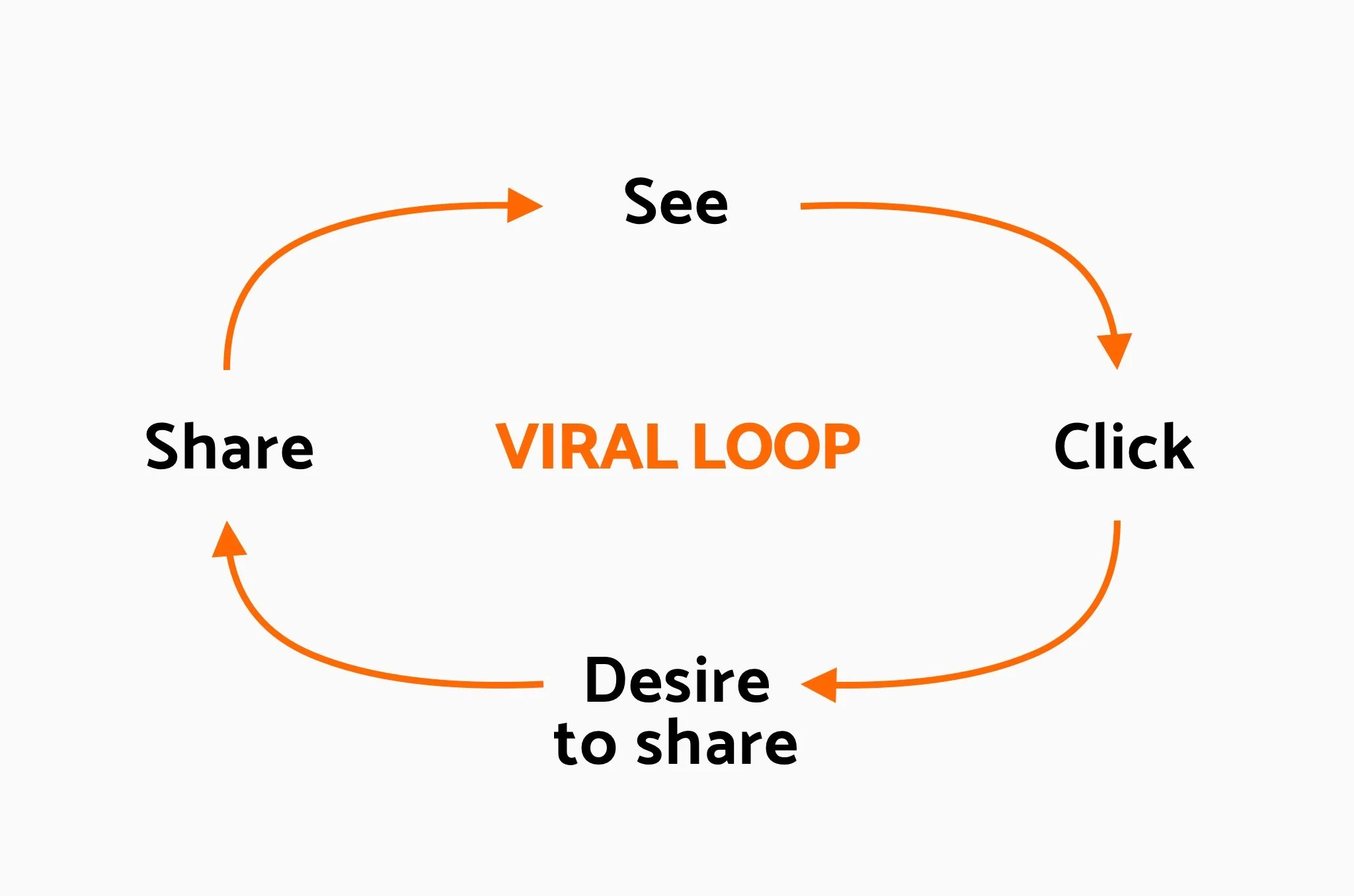
Simply put, a viral loop is a self-reinforcing cycle where your users keep bringing in more users. One customer invites a friend, that friend becomes a customer and invites more friends, and so on, creating a compounding loop of growth. It’s a never-ending process in which your product essentially markets itself: customers invite people within their network to join, expanding your reach. When done right, this chain reaction can exponentially increase your user base without heavy spending on advertising.
“88% of customers trust recommendations from friends more than any other form of marketing.”
Why do viral loops matter so much for mobile apps? Because they tap into the most powerful force in marketing: word-of-mouth. People trust recommendations from people they know. A well-designed viral loop harnesses that trust at scale. Every time a user shares your app or invites someone, it’s like a personal endorsement for your brand: a far warmer introduction than any banner ad or app store blurb could achieve. Benefits of viral loops, beyond just user growth:
Organic User Acquisition: Your user base can snowball without proportionate marketing spend. For a startup, this means dramatically lower CAC (customer acquisition cost). It’s essentially free advertising once the loop kicks in. Dropbox’s referral loop, for example, allowed it to bypass traditional ad spend that would have been unsustainable.
Brand Awareness & Trust: Each share or invite spreads your brand to new eyeballs. Because the message comes from a friend or peer, it carries built-in credibility. A friend’s invite or a coworker’s recommendation feels inherently trustworthy, giving new users confidence to try the app.
Exponential Growth Potential: Viral loops can produce an exponential curve if each user brings in more than one new user on average. This viral coefficient can turn modest traction into explosive growth. Instagram, for instance, gained its first 1M users in about 2.5 months, largely by leveraging social sharing and network effects. Three times faster than Facebook’s early growth.
Engagement & Retention: The act of inviting or sharing often means users are engaging more deeply with your product, posting content, sending referrals, etc. It keeps your app top-of-mind. And if incentives or social features are involved, users have reasons to come back to check their referral status, see responses, etc.
In short, viral loops can be a game-changer. Instead of pouring money into ads that yield linear growth, you invest in a mechanism that multiplies growth. Now, let’s dive into how to implement these loops, and the tactics top apps have used to spiral into success.
Referral Programs. Let Users Do the Marketing
One of the most proven viral loop techniques is the classic referral program. The concept is straightforward: encourage existing users to refer new users by offering rewards or benefits. It’s “users bringing in users” on a systematic basis. Referral programs, especially two-sided ones, turn your happy customers into an unpaid marketing force.
How it works: In-app, users are given an easy way to invite friends, often via a special link or code. When the friend signs up, both parties get a perk. The beauty is that it feels like helping a friend rather than doing the company’s marketing. Choose a two-pronged reward that benefits both the current user and their friend, so that sharing your app “feels like a gift” rather than a selfish ask. This mutual incentive structure aligns everyone’s interests: the existing user, the new user, and your app all come out ahead.
Dropbox’s 3900% Growth Case
No discussion of referral loops is complete without Dropbox, which is often cited as a textbook example. In 2008-2010, Dropbox engineered a referral program so effective that it permanently boosted signups by about 60% and drove the user base from 100k to 4M in just 15 months. How did it work? Dropbox gave 500 MB of free storage to both the referrer and the friend who joined, effectively investing in its own product as the reward. Users loved getting extra space (a reward tightly tied to the product’s core value), and inviting friends was easy to do via email or social media. The results were astonishing: in a single month (April 2010), users sent 2.8M referral invites, accounting for around 35% of Dropbox’s daily sign-ups in that period. Thanks to this viral loop, Dropbox doubled its user base every 3 months at its peak. Such growth would have been impossible to buy with ads, especially since paid ads were costing them $200+ per customer before.
Tesla Referral Program with 40x ROI
Tesla didn’t replace advertising with referrals, it replaced advertising with a viral loop built on identity, status, and obsession. Long before the referral program existed, owners were already doing the marketing for free, proudly explaining Autopilot at dinner parties and giving unsolicited test drives to friends. Tesla simply formalized that behavior into a loop: every new buyer rewarded the referrer, and every reward encouraged the next referral. Early versions used simple, double-sided credits, proving the engine worked with eye-watering returns. But the real breakthrough came when Tesla moved beyond cash and leaned into what its customers actually valued — exclusivity, novelty, and proximity to the future. Instead of bigger discounts, Tesla added competition, tiers, and experiences money couldn’t buy: free cars for top referrers, Gigafactory openings, SpaceX tours, invite-only events, and merchandise unavailable to the public. Each layer made the loop stronger. Refer once and you get a reward. Refer more and you gain status. Refer a lot and you become part of the Tesla inner circle. The incentives didn’t just motivate sharing — they reinforced belonging to a tribe. The result was compounding growth at a fraction of traditional marketing costs, with referred customers who stayed longer, spent more, and referred again. Tesla’s referral program wasn’t a campaign. It was a self-sustaining system where the product created advocates, advocates created users, and users fueled the next turn of the loop.
Other companies have found similar success by tailoring the incentive to their product. PayPal famously paid people cash bonuses for referrals in its early days, jumpstarting its network growth. Ride-sharing apps like Uber and lodging platform Airbnb later copied this playbook, offering credits toward rides or travel when you invited friends. The key is that the reward is relevant and attractive to your users. If you’re a cloud storage app, free space is perfect. If you’re a language learning app, maybe a free month of premium features for each referral could work.
Tips for implementing referral loops:
Bake it into onboarding: Prompt new users to invite friends early, when their excitement about the app is highest. Dropbox, for example, made referrals the final step of its new user setup: “Get more free space by inviting friends”.
Emphasize the benefit: Frame the messaging around what the user gets, not what they’re giving. “Invite friends” sounds like a chore, but “Get 500MB free for each friend you invite” is a win-win proposition.
Make sharing dead simple: Provide multiple ways to refer – unique links, contact list invites, social sharing buttons – and make them accessible in one tap. For instance, Dropbox’s referral dashboard let you send an email, import your address book, or post an invite link to socials, all in-app.
Show progress and celebrate it: Let users see the rewards they’ve earned and how many more invites could unlock the next perk. A visible referral status bar or count, e.g. “3 of 5 friends invited. 2 more for 1Gb bonus!”, can motivate users to keep sharing. Everyone loves a progress bar and a feeling of accomplishment.
Close the loop: When a referral is successful, send a confirmation (e.g. “You earned free space!”) and use that moment to encourage the next invite. Dropbox would email users when a friend joined via their link, congratulating them on the new free storage and suggesting they invite more friends, effectively looping the loop again.
Referral programs are a time-tested way to achieve viral growth. They work best when your product has a broad appeal (so users naturally think of friends who’d benefit) and when the reward is something you can sustainably give. If done right, your users will gladly do the marketing for you, and get their friends hooked in the process.
Invite-Only Systems. Viral Buzz Through Exclusivity
Sometimes, the fastest way to increase demand is to restrict supply. Invite-only systems leverage the psychology of exclusivity and FOMO (fear of missing out) to create viral growth. The idea is to make your app accessible only via invitation in the early stages. Humans naturally desire what’s scarce or hard to get, so an invite-only app becomes the “hot ticket” everyone is talking about.
The strategy has a long pedigree (e.g. Gmail had private beta invites in 2004). In the mobile app era, one of the most headline-grabbing examples was Clubhouse. At its peak hype in 2021, Clubhouse’s audio chatrooms felt like a VIP club behind velvet ropes. You could only join if an existing user sent you an invite, and each user had a limited number of invites to give out. This created immediate buzz: people were publicly begging friends for a Clubhouse invite just to see what was inside. In December 2020 the app had around 600k users, and by the end of January 2021 it had exploded to about 2M. A 3x jump in a matter of weeks. That growth was entirely organic, driven by the frenzy of people scrambling to get in.
Why did this work so well? Exclusivity builds intrigue. Clubhouse employed what growth hackers call the “velvet rope” strategy. Like a nightclub with a bouncer and a VIP list, the app’s “you can’t sit with us” approach made it more desirable. The psychology is simple: when something is hard to get, we assume it’s valuable. Every time you heard industry peers or friends chatting about the great conversation they had on Clubhouse last night, you really wanted to be there. The more insiders raved about it, the more outsiders’ FOMO grew.
There’s another benefit: invites carry trust. An invite-only model inherently uses social proof – if your friend invites you to an exclusive app, you instantly trust it more than if you just saw it in an app store. In Clubhouse’s case, every new user was vouched for by an existing user, which greased the onboarding process. This also meant rapid growth didn’t require huge budgets: invites don’t require any financial cost beyond finding the initial users. The users themselves powered the growth by distributing invites, effectively acting as the app’s evangelists.
Implementing invite-only loops. Not every product should start invite-only, but if you can create a sense of exclusivity, it can massively amplify word-of-mouth. Here are some tactics:
Limited Invites Per User: Give each new user a small number of invites, e.g., 2. This not only controls your growth rate but turns invites into precious tickets that people will use carefully. The scarcity of invites makes them a status symbol; people even boasted on social media about having invites to give away. For the app, each user inherently becomes a recruiter.
Waiting Lists with Rewards: If not strictly invite-only, you can use a waitlist to similar effect. Some apps have prospective users sign up for a waitlist and then encourage them to invite friends to move up the queue. This was seen in products like Robinhood’s early days and the launch of Google Inbox. The exclusivity (early access if you get referrals) sparks sharing. In one example, a newsletter called Morning Brew used a referral waitlist to gain its first 100k readers quickly, people could skip the line by referring a few friends.
Staged Rollouts: Roll your app out to an initial cohort (say, a city or a community) and let intrigue build elsewhere. Instagram inadvertently did this by being iOS-only for almost 18 months. That meant millions of Android users were locked out, coveting the app until they could get it. When Instagram finally launched on Android in 2012, it saw one million downloads on the first day – a rush fueled by pent-up demand and jealousy of iPhone users’ Instagram photos. Exclusive access, even if temporary, can light a fire under growth.
One caution: exclusivity as a viral loop works best when your product genuinely delivers value or status. If the “cool factor” wears off and the app itself isn’t compelling, users might churn after the novelty. Clubhouse, for example, saw its engagement wane once the initial buzz faded, and competitors like Twitter Spaces emerged. But as a go-to-market strategy, invite-only hype can produce phenomenal initial momentum and a passionate early community. If your app has a social component or is more fun with friends, this tactic also ensures new users join with their friends (since those are the ones who invited them), which is great for retention.
Gamification. Make Growth a Game
Humans love games, challenges, and rewards – so why not turn growth into a game? Gamification is a powerful technique to drive viral behavior by tapping into users’ natural desire for achievement, competition, and fun. In the context of viral loops, gamification means designing your app’s experience so that users are motivated to share or invite as part of the game.
One masterclass example is Duolingo, the language-learning app. Duolingo grew to over half a billion users by making learning feel like an addictive mobile game. Users earn experience points (XP), maintain streaks for daily practice, level up, and compete on leaderboards. This gamification not only boosts engagement, it has a viral component: users love sharing their achievements. It’s common to see Duolingo learners posting their streak milestones or level-ups on social media, proudly displaying the owl mascot’s encouragement. Duolingo actively encourages such sharing as part of its growth loop. In fact, about 80% of Duolingo’s new users have historically come from organic channels (word-of-mouth and sharing) rather than paid marketing. The company credits its product-led growth: a great learning experience that gets users talking and inviting friends, creating a viral cycle of “learn, brag, recruit”. Here’s how Duolingo’s viral loop works:
You start using Duolingo and find it fun and effective (thanks to bite-sized lessons and a playful design).
You get hooked by gamified elements (streaks, XP points, badges, and leaderboards) which keep you coming back every day.
When you hit a milestone (say a 50-day streak or finishing a skill tree), Duolingo prompts you to share your progress or invite friends to join the fun.
You share a celebratory post or challenge a friend, which exposes Duolingo to people in your network.
Some of those friends download the app to see what it’s about, and many become hooked themselves, repeating the cycle.
It’s a loop that turns users into proud ambassadors. The social currency here is achievement: “Look, I’ve learned 1000 words, and I did it for free on Duolingo!” When users share that, it not only attracts new users, it reinforces the sharer’s commitment: now their friends know they’re learning Italian, so they have extra incentive to keep that streak up.
Tactics to gamify viral loops:
Achievement Sharing: Design shareable achievements or milestones. It could be a certificate, a statistic, a badge – anything that users would be proud to show off. Fitness apps do this (“I ran 5km today with AppX”), language apps like Duolingo do this, even professional apps like coding challenge platforms share certificates of completion. When achievements populate social feeds, they both reward the user with peer recognition and pique the interest of potential new users.
Competitive Elements: If your app can include leaderboards or friendly competition, use it. People love to challenge friends – and you can prompt them to “invite a friend to beat your score” or “compare results with friends.” Mobile games have done this for ages by letting you connect with friends, send lives or gifts, etc., often essentially sending an invite. A famous example was Candy Crush, which spread like wildfire on Facebook by encouraging players to ask friends for extra lives or help to unlock levels (a sneaky viral loop embedded in gameplay).
In-App Rewards for Invites: Gamification can also mean rewarding the act of inviting itself. For example, some apps give users a special badge or status if they refer X friends, or unlock a premium feature once they’ve invited 5 contacts. This way, inviting friends isn’t just a utility action; it’s part of the game. A productivity app might say “Invite 3 teammates to unlock our Pro plan for 30 days,” turning referrals into a quest.
Progress Bars & Challenges: Use visible progress indicators for referral campaigns (“Invite 5 friends to earn a free month. You’ve invited 3 so far”). This borrows from game design’s use of progress bars to motivate completion. It gives users a clear goal and a little nudge to achieve it.
Community and Recognition: People often share to gain social recognition. Some apps highlight top referrers or give shout-outs to users who bring in many others. Publicly celebrating “super-spreaders” (perhaps on a community leaderboard or in a newsletter) can spur competitive referral activity.
At its core, gamification for viral loops is about aligning user incentives with growth. You make sharing/inviting intrinsically rewarding (fun, competitive, or gratifying) rather than a chore. However, a word of caution: the game mechanics must complement your product, not feel tacked on. Users can tell if it’s a shallow gimmick versus a thoughtful enhancement. Duolingo’s approach works because it ties into the motivation to learn and show progress. If you can find the right alignment for your app, gamification can turn growth into an engaging challenge for your users.
Social Sharing & UGC
Not all viral loops revolve around explicit invites or referral codes. Many of the world’s fastest-growing apps achieved virality through content sharing and user-generated content (UGC). In these loops, the product encourages users to create or share content that naturally attracts others to the platform. Every piece of content shared acts as an advertisement and an invitation.
Consider Instagram. From day one, Instagram was built to be shared. The app allowed users to post their filtered photos not just on Instagram, but to Facebook, Twitter, and other platforms with a single tap. This cross-posting capability was huge for growth: whenever someone posted an artsy Instagram photo to their Facebook feed, all their friends would see a little tag “via Instagram” and get curious. In essence, every Instagram user’s content turned into a billboard for the app. This strategy provided a very cost-effective channel for adoption, helping Instagram reach its first million users in a matter of weeks with virtually no traditional marketing. By piggybacking on existing social networks, Instagram’s viral loop let it grow to 100M users in just two years, an incredible trajectory at the time.
Fast forward to the late 2010s, and you see TikTok applying a similar concept, turbocharged. TikTok not only made it easy for users to share videos outside the app, it prioritized it. The TikTok app’s interface prominently features options to share a video to Instagram, WhatsApp, Twitter, etc. In fact, TikTok’s sharing panel has more out-of-app share options than most apps, deliberately encouraging users to blast their content to other networks. And every video shared carries TikTok’s branding: a watermark with the logo and creator’s handle. This seemingly small feature turned out to be a growth catalyst. It meant whenever a TikTok clip went viral on Twitter or an Instagram Story, viewers would see the TikTok logo and often a “Download TikTok” prompt on the link, effectively a free advertisement for TikTok. By leveraging users sharing videos externally, TikTok was able to acquire 6.4 new users(!!!) for every 1 user acquired via traditional marketing. In other words, TikTok built its user base “on the back of other networks”, turning its users into a volunteer marketing army spreading content across the internet.
How to create content-based viral loops:
Make Sharing Frictionless: Provide in-app tools to share content or accomplishments with one tap. Whether it’s a photo, a video, a song, or a high score, ensure users can quickly show it off on popular platforms (and ideally, include your branding or a link). The fewer steps, the more sharing will happen.
Leverage Network Effects: If your app has a social component, use network effects to your advantage. For instance, allow users to find and invite contacts from their phone book or Facebook friends list. Many apps prompt you upon signup: “Find friends who are already using XYZ” or “Invite friends to join you.” This taps into FOMO: seeing a list of friends on the app nudges you to invite others so you’re not alone. Early on, Instagram benefited from Twitter influencers (like co-founder Jack Dorsey) adopting it and sharing; seeing someone you admire using a new platform is a powerful incentive to join.
User-Generated Content Hooks: Encourage users to create content that inherently promotes the app. Examples: a fitness app might generate a shareable graphic of your workout stats branded with their logo. A photo editing app might add a small watermark (as TikTok did) unless users pay to remove it – this way every shared photo advertises the app’s name. Memorable campaigns like Spotify’s “Year in Review” (where people share their music listening stats) are essentially viral loops – users share personal content that doubles as marketing for Spotify. Think about what unique or fun data/creations your app can give users to share.
Hashtags and Challenges: Branded hashtags or social media challenges can create viral loops outside your app that bring users in. TikTok is again king here – many people downloaded TikTok after seeing #TikTokChallenge videos reposted elsewhere. Similarly, a language app might start a hashtag where users post videos speaking a language they learned, inspiring others to try. The content itself (user success stories, funny moments, etc.) becomes the attractor.
Integrations with Other Platforms: Sometimes, integrating with a larger platform can expose your app to a huge audience. For example, Spotify’s integration that shows what friends are listening to on Facebook was a growth driver. For mobile apps, think of clever integrations or partnerships. E.g., a journaling app that lets users publish selected entries to a blog or medium, subtly co-branded, which can draw readers into trying the app.
The unifying principle is to turn your users into your marketers by turning their content into invitations. When someone uses your app and creates something shareable, each share carries the implicit endorsement “I use this app, you might like it too.” Сontent is king, and in viral loops, user-generated content is the royal road to rapid growth. Just be sure the sharing adds value for the user (they should want to share because it’s fun or useful for them, not just for you). If done thoughtfully, this approach can produce an endless stream of new users flowing in from every piece of content your community creates.
Viral Coefficient
Let’s talk about the viral coefficient (aka K-Factor or K), the math behind “going viral”. Think of it like word-of-mouth, but measurable. It answers one simple question: “How many new users does one user bring in?”. Here is the basic math:
if K < 1 — growth dies.
if K = 1 — you’re stuck.
if K > 1 — growth compounds. That’s when things get scary… in a good way.
Quick example: One user invites 4 friends. 25% of them sign up. 4 * 0.25 = 1. So, your K = 1.
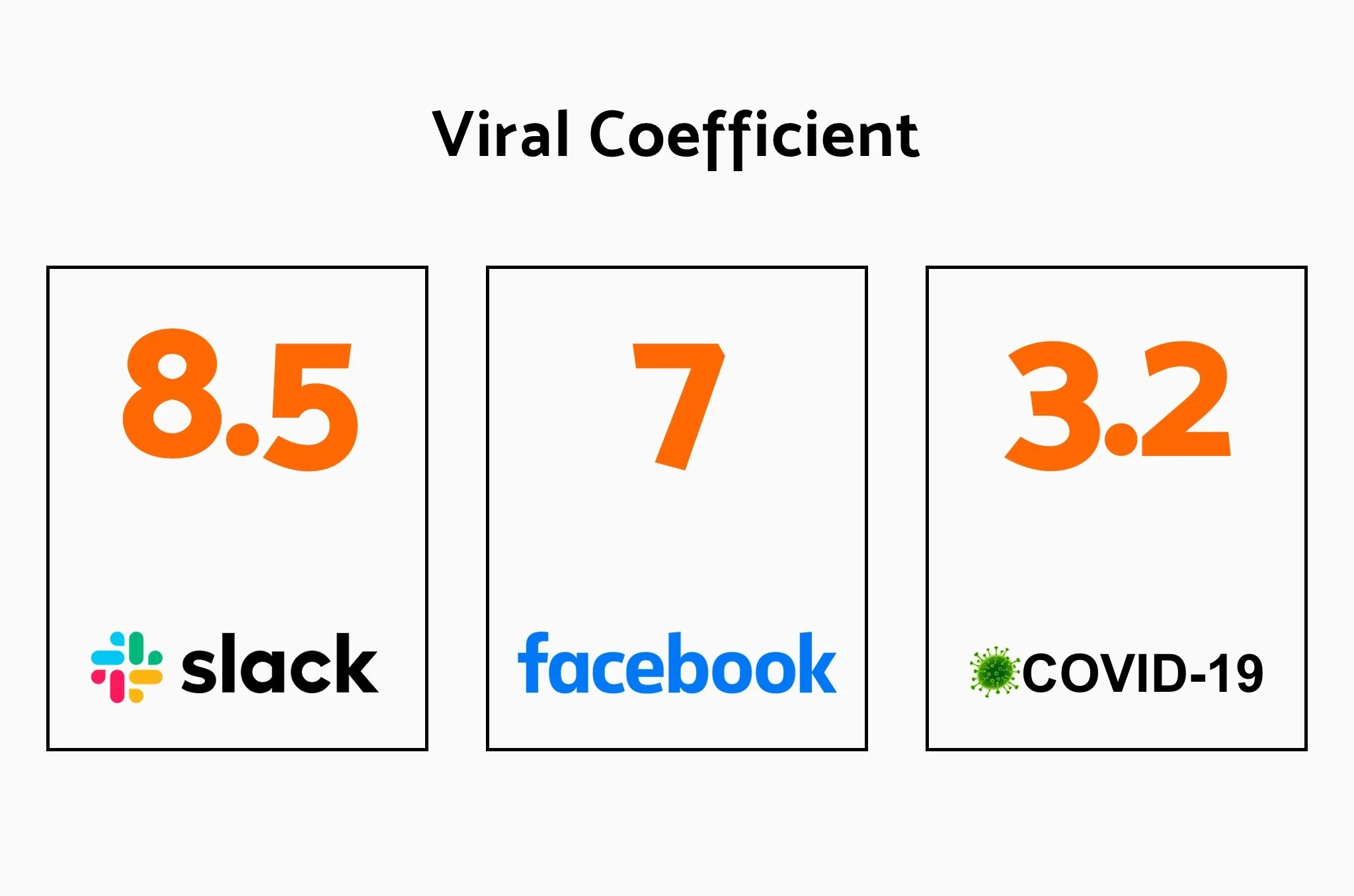
The most successful examples are Slack and Facebook. Slack achieved a K = 8.5 at their peak. Facebook’s viral coefficient was reportedly around 7 at its peak during its early growth phase. This means, on average, each existing user brought in approximately 7 new users through invitations and referrals.
How startups increase K without spammy invites:
Invitations are part of the core action (share → unlock → collaborate).
Clear instant value for the receiver.
Tiny friction (no long forms, no “download to see” traps).
If sharing doesn’t naturally help the user, it’s not a viral loop — it’s just marketing. And marketing doesn’t compound. The best startups don’t beg users to invite friends. They build sharing into the product itself.
Conclusion
Viral loops aren’t magic or luck. It’s the result of smart design and an empathetic understanding of your users. There are multiple paths to viral growth in mobile apps:
Referrals and incentives turn your user base into a referral engine, as shown by Dropbox’s legendary program.
Exclusivity and invites generate buzz and desire, evident in Clubhouse’s rapid ascent via FOMO-driven invites.
Gamification and rewards make sharing feel like play, fueling loops like Duolingo’s where progress is proudly broadcast to friends.
Content sharing and social hooks leverage UGC and networks, with Instagram and TikTok demonstrating how letting users broadcast content multiplies growth.
For startup founders the takeaway is that growth can be engineered. Instead of relying solely on paid acquisition or hoping something “goes viral,” you can bake virality into your app’s DNA. When brainstorming features, ask: “How will this encourage existing users to bring in new users?” Maybe it’s a feature that’s better with friends, so users naturally invite others, or a reward for successful invites, or a moment that’s so delightful people can’t help but share it. Also consider the timing and triggers: integrate the viral loop into the user journey so that it activates at just the right moments. A few final pointers:
Focus on the user experience first. A viral loop will flop if users don’t actually love the product. Viral gimmicks can’t save a poor app; in fact, they can backfire and annoy users. So ensure you have a solid core product that people find valuable or enjoyable. Virality then pours fuel on a fire that’s already lit.
Keep it genuine. The best viral loops feel natural, even inevitable. Think of how people wanted to share their Instagram photos or TikTok videos, or how offering a friend free ride credit through Uber felt helpful, not spammy. Design loops that align with user motivations (helping friends, showing off achievements, being in the know, etc.).
Measure and refine. Viral growth is all about the numbers. Track your viral coefficient (how many new users each user brings on average), the conversion rates of invites sent to signups, and the retention of referred users vs non-referred. These metrics will tell you if your loop is healthy. Small tweaks (copy changes, different incentives, simplifying the invite flow) can dramatically improve results. Treat it as an ongoing experiment.
Be patient but ready to scale. Viral loops can sometimes start slow (you need an initial critical mass to get the network effects going). But when they hit, they can hit fast. Ensure your infrastructure and team are prepared to handle rapid growth. Nothing worse than a hard-earned viral wave crashing your servers or a poor onboarding experience squandering the goodwill of referrals.
In the end, building a viral loop is about creating a win-win scenario: users win by getting value (a reward, a feeling of exclusivity, a fun game, engaging content), and you win by gaining new users. When your growth strategy genuinely benefits your users, they’ll happily participate in it. Viral loops are essentially amplified word-of-mouth, and word-of-mouth is as old as business itself. Mobile apps just give us new creative tools to supercharge it.
So, whether you’re launching the next social network or a niche productivity tool, ask yourself: what’s my viral loop? Design it thoughtfully, execute it diligently, and who knows, your startup might be the next one mentioned in an article like this, as an example of growth gone right 😉