
Why Slow Startups Always Die
Most first-time founders think success comes from building the “right” product. It doesn’t. Startups don’t die because the idea was bad, they die because they move too slow to find out what actually works. While you’re polishing features and debating strategy, faster teams are shipping, learning, and taking your market. In the early stage, speed isn’t an advantage. It’s survival.

Take BeReal. In 2022, they had the world by the throat. They were the "anti-Instagram," a cultural phenomenon built on a single, perfect hook: the daily synchronized notification. But they made the fatal mistake of staying a feature instead of becoming a platform. While they were busy protecting the pure identity of their brand, TikTok and Instagram were watching. The giants cloned BeReal’s core feature in weeks. By the time BeReal tried to iterate and add new dimensions, the hype had evaporated. They were a one-trick pony that refused to learn new tricks until the audience had already left the theater.
Now, look at the origin of the giant that killed them. People forget TikTok started as Cicada (later Musical.ly), an app designed for education. When the founders realized the learning aspect was a total flop, they didn't double down on their vision. They watched the data, saw kids using the tool to lip-sync to 15-second songs, and pivoted in a matter of days. They didn't protect their educational ego, they chased the user's dopamine.
The result? One is a case study in stagnation, the other is a $600 billion empire. The speed of adaptation, how quickly the founders accepted reality and reacted to it, made the difference.
The Lie First-Time Founders Believe
Most first-time founders obsess over building the “right” product. You do interviews, you map personas, you run customer discovery. And then you build…
Here’s the uncomfortable truth: you still don’t know your user. Not even close.
People don’t lie because they’re malicious. They lie because they’re bad at predicting their own behavior.
“I would definitely use this.” - They won’t.
“This is a huge pain point.” - Not big enough to pay for.
So the real risk isn’t being wrong. You will be wrong. The real risk is spending months building something that proves it.
“Building a startup without speed is like flying a plane without instruments. You’re moving. You’re busy. But you have no idea if you’re heading toward the destination or straight into the ground.”
The Decision Trap
Most first-time founders move slowly because they treat every decision like it's a life-or-death surgery. It’s time to learn the Bezos "Door" Framework:
Type 1 decisions (The One-Way Door): These are irreversible or nearly so. Choosing a co-founder, signing a long-term office lease. Move slowly here.
Type 2 decisions (The Two-Way Door): These are reversible. Changing your pricing, testing a landing page, or shipping a raw feature. If it fails, you just walk back through. Move at breakneck speed here.
The failure point: most founders spend "Type 1" energy on "Type 2" problems. If you spent more than an hour debating your button color, you’ve just wasted a day of runway on a decision that takes ten seconds to undo.
The Only Metric That Matters Early
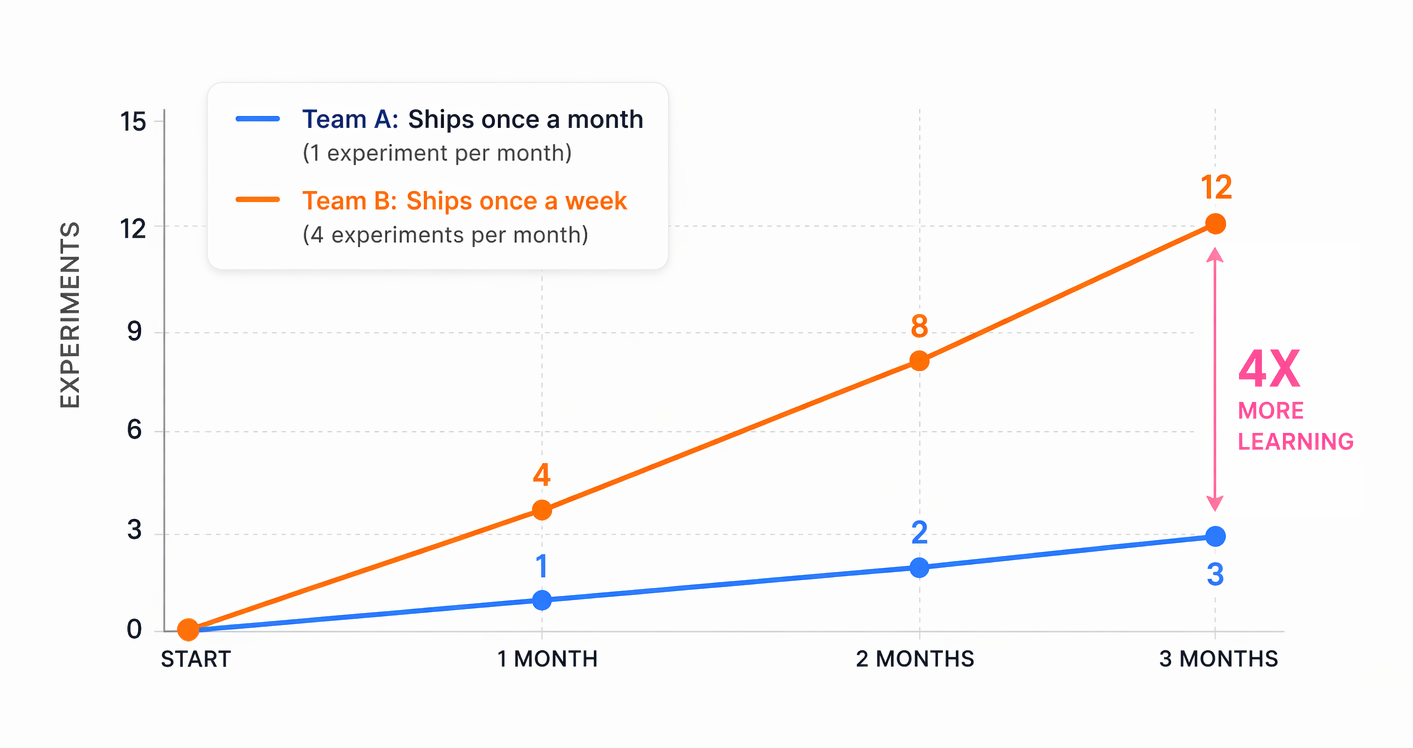
The only metric that matters early is not the number features, not design, not even growth. It’s the speed of iteration. Imagine two teams:
Team A ships once a month
Team B ships once a week
In 3 months Team A has 3 experiments, and Team B has 12 experiments.
Who learns faster? Team B learns four times faster. They find out what’s broken four times faster. They stop wasting money on useless features four times faster. In the early stage, speed isn’t about being productive - it’s about learning before you run out of cash.
Speed is not a nice-to-have. It’s your only real advantage. Because early-stage startups don’t win by being right. They win by being wrong faster than everyone else.
If You Aren’t Cringing, You’re Too Late
The real barrier to speed isn't technical - it's founders’ ego. Shipping an unpolished product is embarrassing. You’re worried people will think you’re incompetent.
The irony? The longer you polish, the higher the chance you’re polishing the wrong thing.
Here is the psychological reality: your users don't care about you. They care about their own problems. If your "ugly" app solves their pain, they’ll use it. If your "perfect" app doesn't solve their pain, they’ll ignore it.
If you aren’t embarrassed by the first version of your product, you shipped too late. Embrace the ego death. Your job isn't to look like a genius, it's to be a scientist who iterates until they find the truth.
What Fast Teams Do Differently
At early stages, the best teams operate more like labs than companies. They don’t “build features”, they run experiments. A simple loop:
ship Monday
get feedback Tuesday
build Wednesday–Thursday
decide Friday: keep or kill
No surveys, no dashboards as a substitute for reality. Just direct contact with users. This is where most teams break, because speed is not a technical problem. It’s a cultural one.
The Culture You Need
To move fast, your team has to accept uncomfortable truths, e.g.:
“We spent 2 weeks on this, and nobody cares. Kill it.”
“This feature was my idea. It failed.”
“Users don’t behave how we expected.”
That requires: no ego, no attachment to ideas, no defending “your” work. Most teams say they want speed. But very few are willing to pay the emotional cost.
Your Business Model Is Also a Guess
Founders love debating pricing like it’s a philosophical problem: $19 or $29? Monthly or annual? Per user or per company?
None of it matters. There’s only one correct price: the one someone pays. Everything else is theory.
Your pricing, your payment flow, your monetization model - it’s all a hypothesis. And like any hypothesis, it needs to be tested fast. If changing your pricing takes weeks, you don’t have a pricing problem. You have a speed problem.
Real-world Example
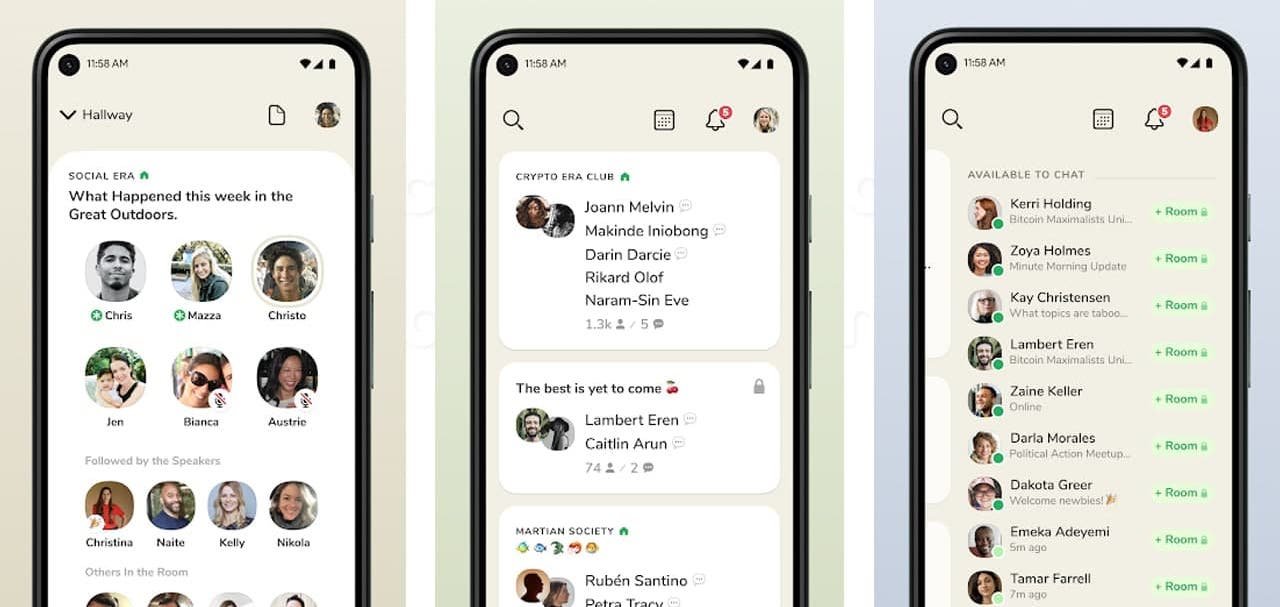
In 2021, Clubhouse was valued at $4 billion. It was the most exclusive club in tech: invite-only, iOS-only, and buzzing with celebrities. They had the ultimate head start in social audio. But while they were busy curating their "exclusive" vibe, they forgot that in tech, the only moat is speed.
Perfection trap: They stayed on iOS for over a year, obsessing over the invite-only culture.
Fatal delay: While Clubhouse was polishing its hallway algorithms, Twitter (now X) launched Spaces. Twitter didn't wait for a perfect UI, they integrated audio into the existing feed of millions.
The Shutdown: By the time Clubhouse finally released an Android app and opened to the public, the pandemic lockdowns had ended, and the competition had already eaten their lunch.
Clubhouse was a museum of "what could have been." They prioritized a controlled, perfect experience over a rapid, global expansion. In the time they took to ship an Android app, the world had already moved on to the next trend.
The Power of the Pivot: Instagram
Before it was the world’s photo-sharing giant, it was Burbn - a cluttered, over-engineered Foursquare clone. You could check in, earn points, and, oh yeah, post a photo. Founders Kevin Systrom and Mike Krieger realized the app was a mess. It was too slow and too confusing. But when they looked at the data, they saw one raw feature users were obsessed with: filters and photo sharing.
The speed move: They didn't fix Burbn. They deleted almost everything. They stripped the app down to just three taps. They went from a bloated mess to a lean photo-machine in weeks.
Founder lesson: Sometimes speed isn't about what you build, it's about what you have the courage to delete.
The Power of the Pivot: Discord
In 2014, Jason Citron was building Fates Forever, a high-quality MOBA for tablets. It was meant to be the "League of Legends" for iPad. It was polished, beautiful, and... nobody played it. But Citron noticed his team was struggling to communicate while playing. They tried Skype and TeamSpeak, and they hated them. So, they hacked together a raw communication tool on the side just to help them build the game.
The speed move: When the game flopped, they didn't pivot to a different game. They realized the side-tool was the real product. They pivoted the entire company into Discord. They stopped being a gaming studio and became a communication platform overnight. Founder lesson: Your "internal tool" might be worth 100x more than your customer product.
…
Notice the pattern? In every case, the original product didn’t matter. What mattered was the founders’ ability to see a tiny spark of user interest and pour all their gasoline on it immediately.
How many useless features are you currently protecting because you’re afraid to admit the “perfect” version isn’t working?
How to Build a Speed-First Culture
If you want to survive startup’s Valley of death, you need to restructure your brain and your team. Forget complex org charts. Start here:
1. The Atomic Team
Forget massive departments. You need a cross-functional squad of 3–5 people: developer, designer, and one product person. Give them total autonomy. If they have to ask the CEO for permission to change a button color, you’ve already lost a day. And one day of delay is a day of wasted burn rate. Direction comes from the top. Execution belongs to the team.
2. Kill Your Darlings
The most dangerous thing in a startup is a "genius feature" that nobody uses. You must foster a culture where it’s a badge of honor to say: "We spent two weeks on this, but the data says it’s trash. Let’s delete it."
3. Weekly Releases
If you haven't shipped anything by Friday, the week was a failure. It doesn't have to be a major release. It can be a landing page test, a pricing tweak, or a bug fix. Just move the needle.
4. Talk to Users Directly
Not through support tickets, analytics dashboards, intermediaries. Your team directly talks to users. Developer and designers hear real questions and user confusion. That’s where real insights come from.
When Quality Finally Matters
Don’t get me wrong, quality matters. But only after you hit Product-Market Fit.
Once your sales are repeatable and your metrics make sense, then you invest in the “boring” stuff: refactoring code, building design systems, and hardening your architecture. At that point, you aren’t searching for a solution - you’re scaling one.
Until then, remember: a perfect product that nobody uses has a value of exactly $0. A raw, ugly product with ten obsessed users is a goldmine of insights.
Only after product-market fit your quality becomes critical. When users come back, when sales become repeatable, when you understand your customer. At that point bugs affect thousands, bad architecture slows everything. Now you have to invest in processes, and clean code. But even then - speed doesn’t go away.
Look at leaders:
Amazon deploys code every 12 seconds
Spotify runs hundreds of experiments yearly
Netflix constantly A/B tests.
They didn’t choose between speed and quality. They built systems that allow both.
A Brutally Simple Self-Test
Ask yourself:
When was your last release?
More than a week ago? You’re slow.
How long from idea to user testing?
More than 2 weeks? You’re slow.
When did you last kill a feature you built?
Never? You’re either lying to yourself or not listening to users.
Summary
Your startup is not a monument. It’s a burning fuse. The fire is your burn rate, and the dynamite at the end is your bank balance hitting zero. You don’t win this game by building the most beautiful, polished bomb the world has ever seen. You win by finding the “Product-Market Fit” fire extinguisher before the spark hits the powder.
If you are waiting for a sign that your product is “ready,” here it is: It’s not. It never will be. Every hour you spend in a dark room perfecting a feature nobody asked for is an hour you’ve stolen from your company’s survival. The most successful founders aren’t the ones who were “right” from Day 1; they are the ones who had the guts to be wrong, publicly and loudly, twelve times a month until they finally stumbled onto the truth.
Here is the 24-Hour Challenge for you. Look at your current sprint. Find the one “genius” feature you’ve been over-engineering for weeks. Strip it down to its raw, ugly, functional core. Ship it this week. If users hate it, thank them for saving you three months of wasted life. If they love it, you finally have something worth polishing.
Your mantra for the road ahead: done is better than perfect. Learning is better than building. And a raw product in the hands of ten real users is worth more than a perfect one sitting on your hard drive.
Go break something!
