Inspired Book Summary: How to Build Products Customers Love
If you don’t have time to read the whole book, we have prepared for you a short overview of the Marty Cagan’s “Inspired: How to Create Tech Products Customers Love”.
Why do some tech products hit the mark and delight users, while others flop? In “Inspired” Marty Cagan distills how the best tech companies consistenly create winning products and how any team can do the same. In short, successful products result from a deliberate approach to product management and team culture, not just a brilliant idea.

Product Discovery
One of core messages is to separate product Discovery (finding what to build) from product Delivery (building it for real). In many companies, teams jump straight into building features from a roadmap only to discover later that customers don’t want the result. Instead, Inspired urges founders and teams to figure out what to build before you start building it. This means investing time in product discovery: the process of brainstorming, prototyping, and validating ideas, as a primary activity, not an afterthought.
Why is discovery so critical? Because many of our ideas are wrong. Typically, at least half of the ideas on a product roadmap won’t succeed – either customers won’t want them, or they won’t solve the problem effectively. Even the ideas that do have potential often require several iterations to get right. That’s a sobering reality for a startup with limited time and money. The way to beat these odds is to quickly weed out the bad ideas and refine the good ones before you invest in full development.
Tackle Risks Early with Fast Experiments
In discovery, your job is to address the biggest risks in an idea through rapid experimentation. Inspired highlights four product risks to test for any new feature or product concept:
Value Risk: Will customers actually buy this or choose to use it? Does it solve a real problem in a valuable way?
Usability Risk: Can users figure out how to use the product? A solution has no value if people can’t navigate it.
Feasibility Risk: Can our engineers build this solution with the time, skills, and technology we have? Technical constraints often dictate what’s possible.
Business Viability Risk: Does the solution work for our business (e.g. fit our brand, sales model, legal/regulatory constraints, profit goals)?
A strong product team doesn’t just list these risks, they actively test them. Instead of spending months building a full product only to learn it fails one of these tests, Inspired advocates running quick, cheap experiments using prototypes. A prototype, whether a clickable app mockup or a simple landing page, lets you get real user feedback within hours or days. Great teams may test 10–20 ideas per week this way, rapidly iterating based on what they learn. The goal is to validate the idea before writing production code. When discovery is done well, the output is essentially a validated backlog of product ideas that have evidence behind them.
Example: Before committing to a major product direction, Amazon and Netflix are known to run countless A/B tests and prototype experiments to gauge customer interest. Google famously kept Gmail in “beta” for years while refining it based on user behavior. Strong teams conduct product discovery to test ideas in hours, not months, focusing on solving customer problems rather than just shipping features from a roadmap. This discovery mindset helps avoid the classic pitfall of creating a well-built product that nobody wants.
In practice, product discovery can involve techniques like customer interviews, usability tests, fake door tests (where you gauge interest in a feature that doesn’t exist yet), and Wizard-of-Oz prototypes (where you manually simulate the product behind the scenes). The specific methods matter less than the mindset: fall in love with the problem, not with a particular solution. For example, Cagan shares a quote from product leader Jeff Bonforte: “I like my product managers to focus on the most miserable thing people have to deal with every day. If you can solve that problem... that can lead to the truly big product wins.”. By obsessing over the customer’s pain point, you remain open to various solutions until you find one that truly works.
Crucially, discovery is a team sport. Inspired emphasizes involving engineers and designers in discovery from the start, not handing ideas to them at the end. Engineers often have creative solutions and technical insights that can shape the product early on, and designers ensure the solution is usable and appealing. When you tackle the major risks early and collaboratively, delivery becomes far smoother because you have confidence you’re building something worthwhile. As a founder, adopting this discovery-first approach means you won’t waste precious months building the wrong product. Instead, you’ll arrive at product/market fit faster. Finding that minimal set of features that actually solves a need for a target market, before you run out of resources.
Building Empowered Product Teams
Another major theme in Inspired is that great products are built by empowered, cross-functional teams, not by solo geniuses or departments tossing work over the wall. The fundamental unit of innovation is a dedicated, durable product team that feels true ownership of their product area. This team typically includes a product manager, a product designer, and 3–5 engineers working together daily. Rather than a temporary project team, it’s a long-lived “mission team” focused on a specific problem space or objective. We use the same approach at molfar.io.
The composition and culture of these teams are intentionally structured to foster speed and innovation. First, keep teams small and focused. Amazon’s Jeff Bezos famously applied the “two-pizza rule”: if a team can’t be fed with two pizzas, it’s too large. Small teams communicate better and move faster, spending less time in coordination and more time building. Amazon’s own internal practice of small, autonomous two-pizza teams exemplifies how a large company stays innovative by empowering tiny startup-like groups. Each team owns a specific customer-focused mission and can largely solve problems independently. For a startup founder, this is a reminder that adding more people isn’t always the answer. A lean, tight-knit team that fully owns a goal can often outperform a bigger, siloed group.
Make teams cross-functional and co-located if possible. A product team works best when the PM, designer, and engineers sit (figuratively or literally) “at the same table” solving problems together daily. Cagan notes that all else equal, a co-located team will significantly outperform a dispersed one, due to easier collaboration and relationship-building. While remote work is common today, the underlying point is to create tight collaboration loops, e.g. through frequent video stand-ups, shared online workspaces, and clear communication channels, so the team acts as one unit. This collaboration pays off in innovation and speed: breakthroughs often happen when an engineer and designer brainstorm directly with the PM, rather than following a rigid sequence of handoffs.
Truly empower the team. An empowered team means they are given a problem to solve (outcome), not a list of features to build (output). Leadership’s job is to set clear objectives and context, but not to micromanage how the team meets them. Cagan draws a parallel to military “mission command” structures: leaders give a clear intent (the goal and why it matters), and small squads are then free to execute as they see fit. In product terms, leadership might say, “We need to reduce the new user onboarding time from 3 days to 3 hours” (a strategic objective), and it’s up to the team to figure out the best way to do that. This autonomy leverages the team’s creativity and frontline knowledge. When teams are trusted to solve a problem, not just implement requirements, they feel ownership – they become missionaries for the cause, not just mercenaries executing tasks. Missionary teams are far more motivated and will usually surprise you with better solutions than a top-down plan would have produced.
To set your product team up for success, Cagan offers a few structural principles. Teams should be organized around outcomes or customer segments, not around internal departments. For example, one team might own “improve shopper conversion on the website” rather than “the front-end UI component” – the former is outcome-driven, the latter could be too technically siloed. Similarly, minimize dependencies between teams. If each team constantly needs work from another, they lose autonomy and speed. This might mean adjusting team responsibilities or building shared services that reduce inter-team bottlenecks. As your startup grows, periodically revisit team structure; the optimal setup when you have 5 engineers will be different when you have 50 or 500. The key is maintaining that nimble, autonomous feel even at scale.
Example: Spotify’s oft-cited model of squads, chapters, and tribes was one attempt to balance team autonomy with alignment. Each squad (aka product team) owns a certain user problem or feature area and includes all the skills needed to design, build, and ship solutions. They’re given freedom to decide how to solve their objective. Many of the best tech companies operate variations of this model, from Google’s small project teams to Netflix’s “full cycle” developers who own services end-to-end. The common thread is empowerment. Teams are most effective when they have ownership and accountability for results and minimal bureaucratic constraints. As a startup founder, if you hire talented people and give them the trust and context to act, you create a culture of innovation that can outpace far larger competitors.
Product Leadership: Vision, Strategy, Guidance
Even the best teams need direction. That’s where product leadership comes in. In a startup might be you as the founder, wearing the product leader hat. Strong product leaders do not simply crank out feature roadmaps or top-down mandates. Instead, their primary role is to set a clear vision, define strategy, and then coach and empower teams to do great work.
Kill the feature roadmap mindset. A traditional roadmap, a big list of features with dates, can actually derail innovation. Cagan argues that “typical roadmaps are the root cause of most waste and failed efforts” in product organizations. Why? Because they often commit teams to building specific features before anyone has validated if those features will solve the underlying problem. It’s a guess locked in stone. Teams become feature factories delivering outputs, rather than problem-solvers delivering outcomes. Moreover, roadmaps tend to be top-down and static, unable to adapt to new learning.
Cagan’s alternative: Leaders should provide business context and direction, not a list of features. This starts with a compelling product vision: a narrative of the future that inspires the team toward a common goal. A product vision typically looks 5 years out and describes the world you want to create for customers. For example, early in Netflix’s life their vision was a world where anyone could instantly watch any movie or show on demand, a lofty vision back when DVDs-by-mail was the core business. A strong vision focuses on the why (the customer problem or desire) and paints a clear picture of the outcome, while being flexible on the specific path to get there. Cagan advises founders to “start with the why, fall in love with the problem, be stubborn on the vision but flexible on the details”. Your vision should be high-level but vivid enough to motivate your team, your investors, partners, and even customers.
With vision set, the leader defines a product strategy to reach it. Strategy is basically the sequence of products/releases/tactics to progressively deliver on the vision. It’s how you’ll get from here to there, often focusing on one target market or problem at a time. For instance, a strategy might be: “First, launch a product that nails the SMB market, then expand to enterprise” or “Develop the core platform, then add consumer-facing apps on top”. The strategy is about making deliberate choices: which opportunities to pursue, and in what order, to move toward the vision. Unlike a fixed roadmap, strategy can evolve and doesn’t prescribe every feature, it just provides the guardrails and priorities.
Another key tool is setting clear objectives and measurable results for teams. Cagan is a proponent of using OKRs (Objectives and Key Results) to replace traditional roadmaps. An Objective is a qualitative goal (e.g. “reduce onboarding time for new customers”), and Key Results are the specific metrics that define success (e.g. “onboarding time <1 hour on average”). By giving teams 1–3 big objectives with measurable outcomes, you communicate what matters without dictating how to achieve it. The team is then held accountable to move those needles, which is ultimately what the business cares about. Leaders should share these objectives along with the product vision and context so that every team understands how their work contributes to the bigger picture. When teams hit obstacles or when specific features prove ineffective, a results-focus allows flexibility to try alternative approaches, rather than blindly shipping the feature list. In fact, Cagan has noted that after years of championing OKRs, he cautions they only work in cultures that truly embrace empowerment over command-and-control; the intent is to focus on outcomes, not to create another bureaucratic process.
Just as important as vision and strategy, product leaders invest in the people and culture. As your startup grows, you might hire your first product manager or eventually a product leadership team. Advice: hire and develop product managers who are smart, creative, and passionate, and then coach them rather than micromanage. The single most important role of any VP Product is to develop a strong team of product managers. Great product leaders spend a large portion of their time recruiting talent, mentoring team members, and creating an environment where innovation thrives. This might include embedding the right values (customer empathy, integrity, curiosity) and ensuring teams have the right skills and info to make good decisions. It also means breaking down silos. For example, a head of product must work closely with design, engineering, marketing, and other executives to align everyone on product vision and priorities. When conflicts arise (say, two teams need the same resources, or sales wants a different feature priority), product leadership connects the dots and keeps the organization focused on the highest-value work.
Example: In 2003, a young BBC product manager named Alex Pressland envisioned delivering BBC content beyond radio and TV, essentially syndicating it over the internet, years before streaming media was mainstream. This bold idea met resistance internally (legal, editorial, and cultural obstacles). But Alex had a clear product vision “BBC Out of Home” and he persisted. He ran early experiments, even using electronic billboards to show BBC content outside traditional channels, to prove the concept’s value. By evangelizing the vision to stakeholders and demonstrating results, he gradually won support and helped launch new products and partnerships that realized this vision. The BBC example shows that even within a large organization, a passionate product leader with a compelling vision can drive transformational change. For a startup founder, the lesson is to be that visionary product leader for your team: articulate an inspiring future, back it up with evidence and quick wins, and rally everyone, from investors to engineers, around making it a reality.
In summary, the role of product leadership isn’t to dictate features – it’s to paint the vision, set the direction, then empower and trust the teams to deliver solutions. Leaders ensure that the entire organization is aligned to sell to the same customer and move in the same direction. They also create a culture where it’s okay to experiment and even fail on the way to getting it right (as long as you learn and course-correct). If you’re a founder, you are your startup’s de facto product leader in early days – your clarity of vision and ability to focus the team on true north objectives will heavily influence whether your product finds traction.
The True Role of a Product Manager
Inspired dedicates plenty of attention to the product manager role. In a startup’s early phase, the Product manager will likely be you, the founder. As you grow, you might hire dedicated PMs. In either case, it’s important to know what a good product manager does, and how they add value.
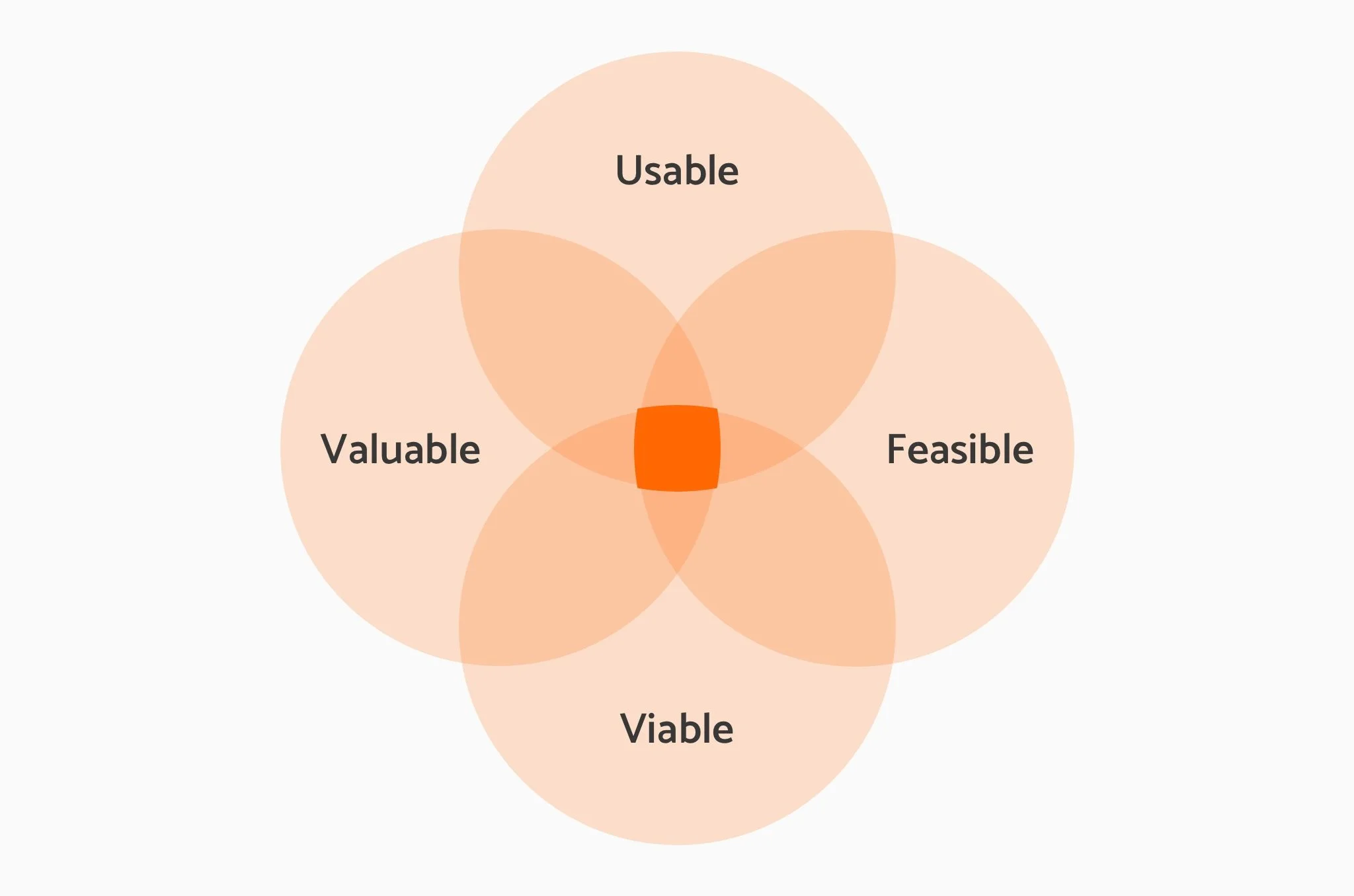
A simple way to describe the PM’s job: the product manager is accountable for ensuring the product is valuable, usable, and feasible. Let’s unpack that:
Valuable means customers want it. The product solves a real problem or fulfills a need in a way that customers will pay for or adopt enthusiastically.
Usable means users can figure out how to use it. The UX is effective, with help from your designers.
Feasible means it can be built with the technology and resources available. Relying on your engineers’ expertise to assess and innovate.
Viable means it works for the business. It aligns with your business model, brand, and legal/financial constraints.
The product manager sits at the intersection of these considerations. They’re not expected to be the lone genius (aka Steve Jobs) coming up with everything. Rather, they lead the cross-functional team in discovering and delivering a successful product. The PM is often the behind-the-scenes leader who makes sure all the pieces (technology, design, marketing, etc.) come together into something customers love. What does this mean in practice day-to-day? Here are Key responsibilities of a Product manager:
Deeply know your customer and market. A PM should be the expert on the users – their pain points, desires, how they work, and how they decide to buy. This also means understanding the industry and competitors. If you don’t empathize with customers or know what else they’re using, you’re flying blind.
Dig into data. A great PM is comfortable with both qualitative insights and quantitative data. You’ll analyze usage analytics, experiment results, and market research to inform decisions. Is that new feature increasing conversion? Which cohort of users is churning and why? Data-savvy PMs can answer these questions and spot opportunities or problems early.
Define and prioritize the work. Based on all the input (customer research, data, business goals, tech constraints), the PM decides what the team should build next to maximize value. This means saying ‘no’ a lot. You can’t do everything. A PM is constantly evaluating opportunities and determining what gets built and delivered, and providing evidence for why it’s worth building. This involves writing clear problem definitions, user stories, and maintaining a prioritized backlog of ideas that have been validated through discovery.
Collaborate with design and engineering. A PM doesn’t hand off a spec and disappear; they are working side by side with designers and engineers daily. For example, you might brainstorm solutions together on a whiteboard, iterate on prototypes with the designer, or consult engineers on feasibility trade-offs. Cagan strongly advises PMs to “have your designer sit next to you” and include them from the very start of thinking about an idea. Similarly, involve engineers early in discovery, their technical ideas can spark innovative approaches and they’ll flag what’s harder or easier to build. By the time you enter development, the whole team should already understand why they’re building what they’re building. This avoids the common scenario of engineers feeling like code monkeys implementing top-down features they had no say in. Instead, they become partners in solving the problem, which yields better solutions.
Drive execution and outcomes. While project managers might track timelines, the product manager is tracking outcomes. You ensure the work actually achieves the intended result. If it doesn’t, you rally the team to iterate or pivot. A PM’s job is not done at launch; it’s done when the business results are met. This often means defining metrics for success and monitoring them post-release, coordinating with marketing on launches, and learning from whatever happens to continually improve the product.
All of this requires a unique mix of skills. PMs are sometimes called “mini-CEOs” of the product because they need a broad view (customer, business, tech) and lead through influence. However, unlike a CEO, a product manager usually has no direct authority over the team: the engineers, designers, and others don’t report to the PM. Thus, success comes from leadership without authority: you earn trust by demonstrating insight, making solid decisions, and truly caring about the team’s mission. Great product managers are passionate about the product, empathetic with customers, and possessing unwavering integrity to do right by their team and users. They are persistent in the face of challenges and creatively work around obstacles rather than giving up.
If you’re a startup founder acting as PM, take stock of these qualities and responsibilities. Ask yourself: Am I spending enough time with customers directly? Do I truly understand the data? Am I empowering my engineers and designers to contribute ideas? It’s easy to get pulled into fundraising or day-to-day operations, but the product won’t find its market without you actively at the helm guiding it. As your company grows, instill this approach in any new product managers you bring on. Teach them to focus on outcomes over outputs.
To cement the importance of the PM role, Cagan points out that at top tech companies like Google, Amazon, or Apple, product managers are key to driving innovation. They are often unsung heroes behind big successes. For example, the creation of the iPhone is widely attributed to Steve Jobs, but behind the scenes were product and design leaders obsessing over details and user experience. As Cagan says, behind every great product, there’s someone (a product manager or product-minded founder) making the tough calls and leading the team to excellence. Embracing that role in your startup, or empowering someone else to, is one of the best investments you can make toward building a product customers truly love.
Conclusion
Working with tech startups, it’s easy to fall into the trap of rushing out features and chasing competitor checklists. Inspired offers a different path: one where you start with the customer’s problem, experiment your way to a solution, and build a team and culture that consistently innovates. Spend time on product discovery to ensure you’re building something people actually want. Assemble an empowered product team of missionaries who own outcomes, not just tasks. Provide inspiring leadership through vision and clear objectives rather than micromanaging features. And if you wear the product manager hat, remember your job is to be the champion of the user and the arbiter of value, usability, feasibility, and viability all at once.
The ideas in Inspired are not theoretical, they’re drawn from observing how the best companies consistently deliver products that delight customers. By adopting these principles in your startup, you’ll avoid many common pitfalls and be far better equipped to create technology products that your customers love, and that help your business thrive. In short, building a great product is hard, but as Marty Cagan shows, it’s a skill you can learn and a mindset you can cultivate. Armed with inspiration and practical techniques from one of product management’s leading thinkers, you can increase your odds of building the next product success story. Now, it’s up to you and your team to put these ideas into practice. Good luck, and stay inspired!